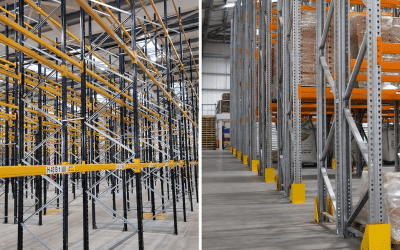
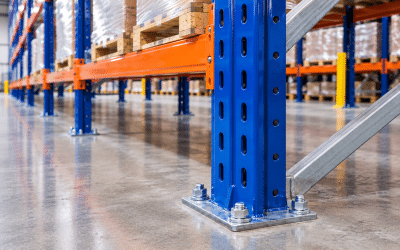
Improper pallet positioning may seem like a minor oversight, but in warehouse environments, it can lead to major consequences – ranging from product damage to serious racking collapses. In this guide, we’ll show you what correct pallet placement looks like versus common mistakes that could be costing your operation time, money, and safety.
Why Pallet Positioning Matters
Pallet racking systems are designed with strict safety tolerances. Misaligned pallets can:
- Exceed beam capacity unintentionally
- Cause beams to deflect or buckle
- Make forklift retrieval hazardous
- Lead to uneven weight distribution and rack collapse
- Violate SEMA and HSE guidelines
Correct pallet placement isn’t optional – it’s essential for compliance and safety.
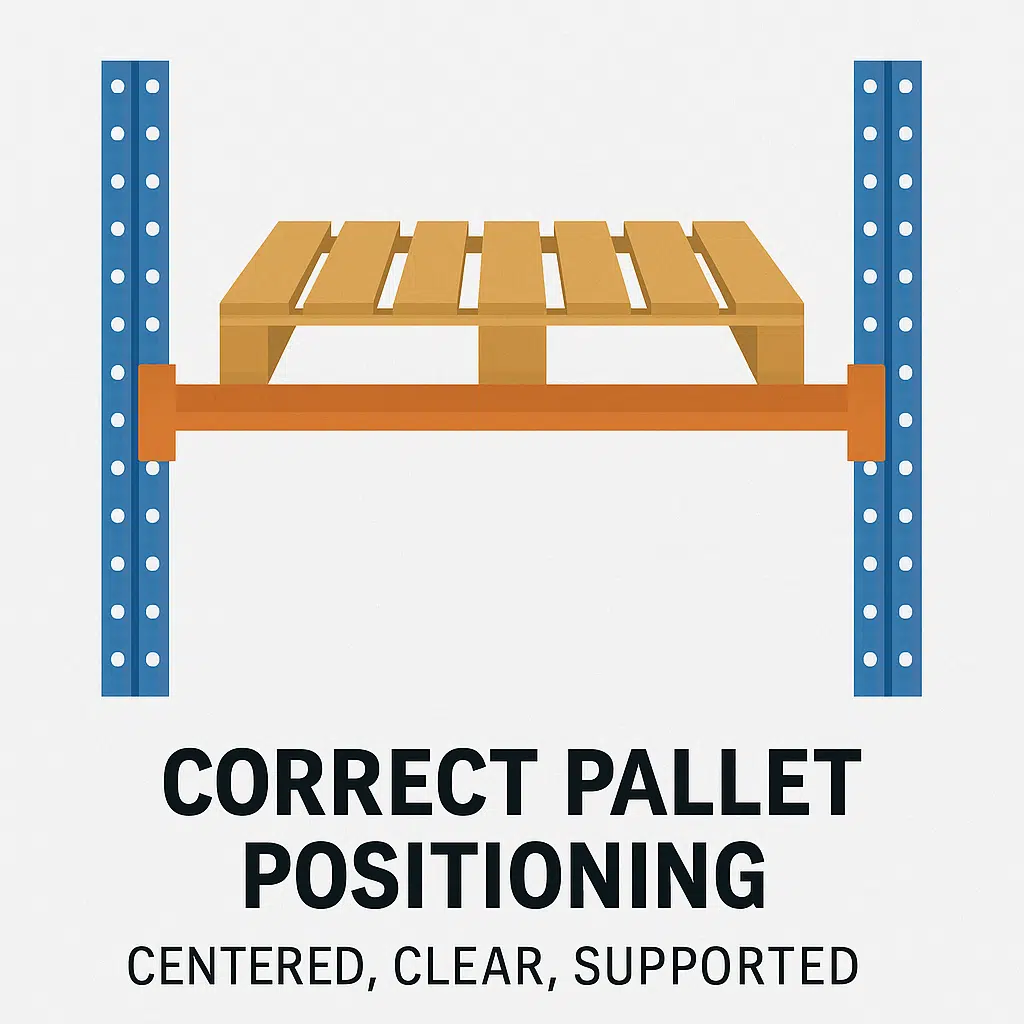
✅ Correct Pallet Positioning
Here’s what you should look for when pallets are loaded properly:
1. Centred on Beams
- Each pallet sits evenly between beam edges with overhang evenly distributed.
- Typical overhang should be around 50mm front and back, unless your racking is designed for flush placement.
2. Fully Supported
- Both stringers or blocks (the base of the pallet) rest fully on the front and rear beams.
- Never allow unsupported edges to float in mid-air.
3. No Contact with Uprights
- There should be at least 75mm clearance between the pallet and the upright frame.
- This allows for safe loading/unloading and avoids impact with the rack.
4. Level Load Distribution
- Load weight is evenly spread across the pallet surface.
- Uneven or high-centred loads can tip during movement or place strain on specific beam points.
❌ Incorrect Pallet Positioning
Let’s look at the mistakes that can cost you:
1. Pallet Overhanging Too Far
- When pallets overhang more than the design allows, the centre of gravity shifts, increasing risk of tipping or beam overload.
2. One Stringer Off the Beam
- This is a serious hazard. It can cause beams to bend, and pallets to fall when lifted by forklifts.
3. Pallet Touching the Upright
- Even minor contact can create enough pressure to weaken uprights over time, leading to structural compromise.
4. Stacking Across Beams (Wrong Orientation)
- Pallets placed across beams rather than along them aren’t supported properly.
- Never store a pallet perpendicular to beam direction unless you have mesh decks or extra supports.

Standards to Follow
Under UK regulations and SEMA guidelines, warehouse operators must:
- Inspect racking weekly for signs of pallet misplacement
- Train staff on correct loading methods
- Use Load Notices with clearly marked beam positions and capacity
- Employ anti-collapse mesh and pallet backstops where risk is present
Best Practices for Safe Pallet Loading
- Use pallets in good condition (no broken blocks or splinters)
- Standardise pallet size across your warehouse where possible (e.g. 1200mm x 1000mm)
- Clearly mark racking levels and use guides or stoppers if needed
- Consider installing pallet support bars or mesh decks for added safety
Final Thoughts
Correct pallet positioning isn’t just about aesthetics – it’s about protecting your people, your products, and your racking investment. By training your team and following warehouse safety standards, you can reduce damage, improve productivity, and stay compliant.
📥 Need a visual training aid? Download our Correct Pallet Positioning Guide or contact us on 0800 612 3210 if you need to purchase warehouse accessories and to organise a warehouse racking inspection.