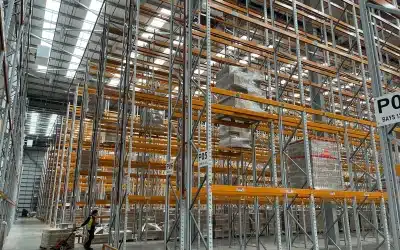
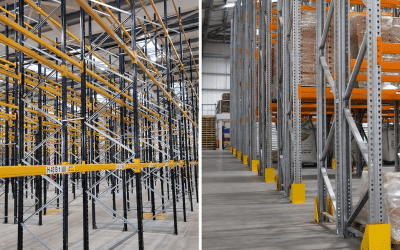
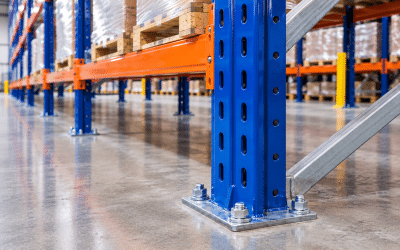
Pallet racking is an essential part of many warehouses, distribution centres and storage facilities. When correctly specified, installed and maintained, a pallet racking system can provide years of reliable and efficient storage. However, pallet racking can develop problems over time. Damage from forklifts, overloading, incorrect installation, missing components and poor maintenance can all affect the safety and performance of a racking system. Understanding the most common pallet racking problems and knowing what to do when they occur can help prevent accidents, protect stock and extend the useful life of your warehouse racking.
In this guide, we look at common pallet racking issues, how to identify them and the appropriate steps to take to resolve them.
1. Damaged Uprights and Frames
One of the most common pallet racking problems is damage to the upright frames. Uprights can be struck by forklifts, pallet trucks or other warehouse equipment, particularly at the lower levels of a racking system.
Damage may include:
- Bent or dented upright columns
- Damaged bracing
- Cracked or distorted components
- Damaged baseplates
- Uprights that are no longer vertical
- Impact damage to frame components
How to fix damaged pallet racking
Do not simply straighten or repair a damaged upright yourself. Damaged pallet racking should be assessed by a suitably competent person.
Depending on the severity of the damage, the affected component may need to be replaced. In some cases, the entire frame may need to be inspected to determine whether other components have also been affected. Where damage has occurred, the area should be made safe immediately. If the damage presents a serious risk, the affected section should be unloaded and taken out of service until suitable remedial action has been completed.
2. Overloaded Pallet Racking
Every pallet racking system has a maximum safe working load. Exceeding the specified capacity can place excessive stress on beams, frames and other components.
Overloading can happen when:
- Heavier pallets are stored than originally planned
- The type of goods stored changes
- Additional pallets are added without checking capacity
- Beam levels are changed
- Pallet weights are incorrectly estimated
- Load notices are missing or ignored
How to fix an overloaded pallet racking system
Check the manufacturer’s load information and ensure the safe working load (SWL) is clearly displayed on the racking’s load notice. If you are unsure whether your existing racking can safely support a particular load, seek professional advice before storing it. Never assume that because a pallet fits physically into a location, the racking is capable of supporting its weight. If your storage requirements have changed, a professional racking designer can assess the system and recommend an appropriate configuration.
3. Missing or Damaged Beam Locks
Beam locks are an important safety component of many pallet racking systems. They help secure beams within the upright frame and prevent accidental dislodgement. A missing or damaged beam lock can compromise the security of the connection.
How to fix missing beam locks
Check every beam connection regularly to ensure that the correct locking mechanism is present and properly engaged. If a beam lock is missing or damaged, it should be replaced with the correct component for that particular racking system. Do not assume that a generic replacement will be suitable. Pallet racking components can differ between manufacturers and systems.
4. Bent or Damaged Beams
Racking beams can become damaged through forklift impacts or incorrect pallet handling. Even relatively minor-looking damage can affect the structural integrity of a beam.
Look for:
- Bent beams
- Dents or impact marks
- Twisted components
- Damaged beam connectors
- Beams that are no longer sitting correctly in the frame
How to fix damaged beams
Damaged beams should be assessed by a competent person. Depending on the extent of the damage, replacement may be required. Do not attempt to straighten a damaged beam and put it back into service. Replacement beams must be suitable for the existing pallet racking system and capable of supporting the required load.
5. Incorrect Pallet Placement
Incorrectly positioned pallets are another common pallet racking problem. Pallets should be placed securely and consistently within their designated storage locations.
Problems can occur when:
- Pallets are not centred correctly
- Pallets are pushed too far back
- Pallets are positioned unevenly
- Loads overhang excessively
- Pallets are damaged
- Goods are unstable or poorly wrapped
How to fix pallet placement problems
Warehouse staff should receive appropriate training on how to load and unload the racking safely. Pallets should be checked before being placed into storage, and damaged or unsuitable pallets should not be used where they could create a safety risk.
Consider using pallet supports, decking or other suitable accessories where the racking configuration requires additional support.
6. Missing or Inadequate Racking Protection
Forklift traffic can expose pallet racking to repeated impact, particularly around aisle ends and heavily used areas. Without suitable protection, an accidental collision can cause significant damage to upright frames.
How to fix the problem
Consider installing appropriate racking protection such as:
- Upright protectors
- Column guards
- Rack end barriers
- End-of-aisle protection
- Tubular barriers
The right type of protection will depend on the warehouse layout, traffic movements and racking configuration. Racking protection should be inspected regularly because even protectors can also become damaged through repeated impacts.
7. Racking That Is Not Level or Plumb
Pallet racking needs to be installed correctly. Frames that are significantly out of alignment may indicate installation problems, impact damage, floor issues or movement within the structure.
During inspections, check for:
- Uprights that appear out of plumb
- Uneven frames
- Loose or damaged fixings
- Damaged baseplates
- Missing shims
- Signs that the racking has moved
How to fix uneven or leaning pallet racking
- Do not attempt to force a leaning frame back into position without first establishing why it has moved.
- The system should be assessed to determine whether the issue is caused by installation, floor conditions, damaged components or another underlying problem.
- Professional assessment may be required before the racking can safely be returned to service.
8. Missing Load Notices
A pallet racking system should have clear information showing the loads it has been designed to carry. Without accurate load information, warehouse employees may not know the maximum permissible load for each beam level or configuration.
How to fix missing load notices
A suitable load notice should be displayed prominently where warehouse staff can easily see it. If the original load information has been lost, do not guess the capacity of the racking.
The system may need to be assessed to establish the correct load information before a replacement notice can be produced.
9. Mixing Racking Components from Different Manufacturers
It can be tempting to use spare components from another pallet racking system when replacing damaged parts. However, pallet racking components are not necessarily interchangeable.
Different manufacturers can use different:
- Upright profiles
- Beam connectors
- Beam dimensions
- Bracing arrangements
- Component specifications
- Load capacities
How to fix mixed-component problems
Always establish the manufacturer and specification of the existing pallet racking before purchasing replacement components.
Do not mix components from different pallet racking manufacturers unless their compatibility has been confirmed by a suitably competent professional.
Using the wrong component could affect the performance and safety of the entire system.
10. Damaged or Missing Bracing
Frame bracing helps provide stability to a pallet racking structure. Damaged, missing or incorrectly fitted bracing can therefore be a serious problem.
Inspectors should look for:
- Bent bracing members
- Missing braces
- Loose connections
- Damaged bracing nodes
- Signs of impact
How to fix damaged bracing
Damaged bracing should be replaced with the correct component for the pallet racking system. If multiple components are damaged, or the reason for the damage is unclear, the complete frame should be assessed before further use.
11. Poor Warehouse Housekeeping
Pallet racking problems are not always caused by the racking itself. Poor housekeeping can increase the risk of accidents and damage. For example, pallets, packaging materials and other items left in aisles can obstruct forklift movements and increase the likelihood of collisions.
How to fix poor housekeeping
Implement clear warehouse housekeeping procedures and keep aisles, access routes and emergency areas clear.
Good housekeeping should include:
- Removing damaged pallets
- Keeping aisles clear
- Cleaning spills promptly
- Storing goods securely
- Keeping forklift routes unobstructed
- Reporting any pallet racking damage immediately
12. Failing to Carry Out Regular Racking Inspections
One of the biggest mistakes businesses can make is assuming that pallet racking is safe simply because it appears to be working normally. Damage can be difficult to spot, particularly when it occurs at the rear or lower sections of a frame. Regular inspections can identify problems before they become more serious.
The HSE’s guidance on the safe use of storage equipment recommends that storage equipment is regularly inspected and that a technically competent person carries out a thorough examination at suitable intervals. A formal inspection should also be carried out whenever circumstances that could affect safety change.
How to fix inspection problems
- Establish a documented racking inspection programme.
- Employees should be encouraged to report damage immediately rather than waiting for the next scheduled inspection.
- A professional pallet racking inspection can also provide a more detailed assessment of the condition of the system and identify remedial work that may be required.
What Should You Do If You Find Damaged Pallet Racking?
If damage is discovered, the first priority should always be safety. A sensible process is:
- Report the damage immediately.
- Assess whether the affected area presents an immediate risk.
- Prevent further use of seriously damaged locations where necessary.
- Unload the affected section if required.
- Have the damage assessed by a suitably competent person.
- Replace or repair components as recommended.
- Investigate why the damage occurred.
- Carry out a follow-up inspection before returning the area to normal use.
Simply repainting, straightening or disguising damaged components is not an appropriate solution.
How Can You Prevent Pallet Racking Problems?
Prevention is generally more cost-effective than replacing damaged pallet racking or dealing with an accident.
Good pallet racking maintenance should include:
- Regular visual checks
- Formal inspections
- Prompt reporting of damage
- Appropriate forklift training
- Suitable racking protection
- Correct load limits
- Clear load notices
- Good warehouse housekeeping
- Proper pallet handling
- Replacement of damaged components
- Professional advice when the warehouse layout or storage requirements change
It is also important to remember that pallet racking should not be modified without considering the effect on its structural capacity. Changing beam levels, adding components or altering the configuration can affect the original design assumptions.
When Should Pallet Racking Be Replaced?
Not every damaged component means that an entire pallet racking system needs replacing.
In many cases, individual components such as beams, frames, braces or other accessories can be replaced, provided the replacement is appropriate for the system.
However, replacement may be more appropriate where:
- Damage is extensive
- Suitable replacement components are unavailable
- The pallet racking is obsolete
- The system no longer meets the warehouse’s requirements
- Load requirements have significantly increased
- Components have been repeatedly damaged
- The system cannot be safely repaired
A professional assessment can help determine whether repair, component replacement or complete pallet racking replacement is the most appropriate option.
Frequently Asked Questions About Pallet Racking Problems
What is the most common pallet racking problem?
- Forklift impact damage is one of the most common problems affecting pallet racking. Uprights, beams and protective equipment can all be damaged by warehouse vehicles.
Can damaged pallet racking be repaired?
- Some pallet racking components can be replaced, but damaged structural components should not simply be straightened or repaired without professional assessment. The appropriate solution depends on the type and severity of the damage.
How often should pallet racking be inspected?
- Pallet racking should be subject to regular visual checks and a more thorough inspection by a technically competent person at appropriate intervals. HSE guidance recommends that a thorough examination is carried out at least every 12 months unless a risk assessment determines a different interval is appropriate.
Can I mix different pallet racking manufacturers?
- You should not assume that components from different manufacturers are compatible. Different systems have different designs, dimensions and load characteristics. Always confirm compatibility before using replacement components.
What should I do if my pallet racking is damaged?
- Report the damage immediately and assess whether the affected area needs to be taken out of service. Serious damage should be assessed by a suitably competent person before the racking is used again.
Final Thoughts
Pallet racking is designed to provide robust and efficient warehouse storage, but it needs to be correctly specified, installed, loaded and maintained.
Common problems such as damaged uprights, bent beams, overloaded shelves, missing beam locks, poor pallet placement and inadequate protection should never be ignored. Regular inspections, good warehouse practices and prompt action when damage is discovered can help keep your storage system safe and operational.
If you are unsure about the condition of your pallet racking, need replacement components or are considering changing your warehouse storage requirements, getting professional advice can help you find the safest and most cost-effective solution.
Need help with pallet racking? Shelving & Racking Ltd supplies new and used pallet racking, replacement components and professional pallet racking inspection services. Contact us on 0800 612 3210 to discuss your requirements.