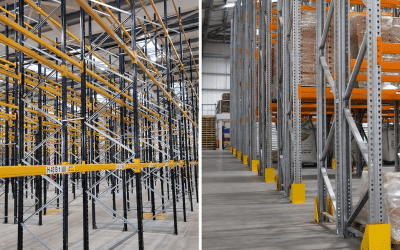
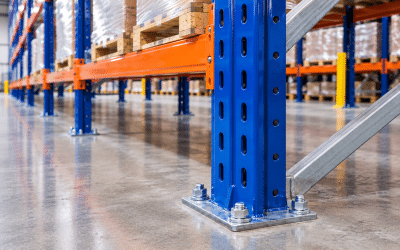
Pallet racking labels play an important role in warehouse safety. They help staff identify storage locations, understand load limits and store goods safely. Whether you operate a small warehouse or a large distribution centre, properly labelled pallet racking can improve organisation, reduce the risk of overloading and support safer working practices.
But what information should pallet racking labels include? Where should you place them, and what are the UK requirements?
In this guide, we explain how to label pallet racking properly and what warehouse managers need to know.
Why Is Pallet Racking Labelling Important?
Pallet racking systems are designed to support specific loads. Exceeding these limits or using the pallet racking incorrectly can increase the risk of damage and collapse. Clear, accurate labels help warehouse staff understand how the racking should be used. They also make it easier to identify individual bays, locate stock and carry out routine safety checks.
The main benefits of proper pallet racking labelling include:
- Improved warehouse safety: Staff can see the permitted load limits and storage requirements.
- Reduced risk of overloading: Clear load information helps prevent beams and frames from carrying excessive weight.
- Better stock management: Location labels make it easier to find, pick and replenish goods.
- Easier inspections: Identifying bays and racking runs helps staff report damage accurately.
- Improved warehouse efficiency: Consistent labelling reduces confusion and saves time when locating products.
What Information Should Pallet Racking Labels Include?
The information displayed depends on the type of racking, its configuration and how your warehouse operates. However, there are several key details to consider.
1. Safe Working Load Information
A pallet racking load notice should clearly display the permitted loading limits for the installed system.
Depending on the design, this may include:
- Maximum load per beam level.
- Maximum load per bay.
- Maximum number of pallet positions or loading levels, where relevant.
- Any restrictions or conditions relating to the loading configuration.
The notice should also identify the racking supplier or installer where appropriate and provide any other information needed to use the system safely.
Important: Load limits must be based on the actual installed racking configuration, not estimates or information copied from a similar-looking system. Beam lengths, frame heights, beam levels, components and loading arrangements can all affect capacity. If you do not know the safe working load of your pallet racking, seek advice from a competent racking specialist before loading it.
2. Rack and Bay Identification Labels
Location labels help staff identify individual racking runs, bays and storage levels.
For example, you might use a system such as:
- A01: Aisle A, Bay 01
- A01-L02: Aisle A, Bay 01, Level 02
- B05-L03: Aisle B, Bay 05, Level 03
Choose a consistent naming system that suits your warehouse layout and stock management software. Display labels where staff can see them easily, including from the relevant picking or operating position. In larger warehouses, aisle-end signs can help staff locate the correct racking run quickly.
3. Pallet Position and Product Labels
Individual pallet positions can have their own barcodes, QR codes or printed location references. These labels support warehouse management systems and help staff confirm that stock is stored in the correct location.
Position labels should be easy to scan, securely attached and suitable for the warehouse environment.
For cold stores, dusty warehouses or areas with limited lighting, choose labels and materials designed to remain readable under those conditions.
4. Safety and Operational Signs
Some warehouses may also need additional signs to communicate site-specific hazards or operating rules.
Examples include:
- Maximum load or weight restrictions for particular storage areas.
- Forklift operating and pedestrian safety signs.
- Restricted access notices.
- Signs identifying damaged or isolated racking that must not be used.
These signs supplement load notices and location labels. They do not replace the need for suitable training, safe operating procedures or regular inspections.
Where Should Pallet Racking Labels Be Positioned?
Correct positioning is just as important as the information on the label.
- Load notices – Position the load notice where it is clearly visible to warehouse staff, typically at the end of a rack run or in another prominent location agreed during installation. Where necessary, provide additional notices so the loading restrictions remain clear throughout the storage area.
- Location labels – Place bay and level labels where operators can identify the correct storage position without confusion. Consider the direction from which forklifts approach and whether the labels can be read from the picking aisle.
- Safety signs – Position safety signs close to the hazard or operating area they relate to. Make sure racking components, stored goods and other equipment do not obstruct them. All labels should be securely fixed and remain readable. Avoid placing labels where normal pallet movements are likely to damage or cover them.
Are Pallet Racking Load Notices a Legal Requirement in the UK?
UK businesses have legal responsibilities to manage workplace risks and ensure work equipment is suitable and used safely.
The Health and Safety at Work etc. Act 1974 and the Provision and Use of Work Equipment Regulations 1998 (PUWER) are relevant to workplace and equipment safety. HSE guidance, including HSG76 Warehousing and Storage: A Guide to Health and Safety, also provides practical advice for warehouse operations.
In addition, BS EN 15635 and relevant industry guidance provide important recommendations for the safe use and maintenance of steel static storage systems.
A key point is that the legal position is not simply that every rack must display a particular standardised label. The requirement depends on the applicable duties and circumstances. However, recognised guidance emphasises the importance of providing clear information about safe loading, including load notices appropriate to the installed system.
For most pallet racking installations, a clear and accurate load notice is an essential part of safe operation.
If you have recently changed your racking layout, added beam levels or moved components, check whether the existing load notice remains valid. Do not assume the original loading information still applies after modifications.
What Should I Do If My Pallet Racking Has No Load Notice?
If your pallet racking has no load notice, or the existing notice is damaged, missing or unreadable, take action before relying on the system’s loading capacity.
Follow these steps:
- Check the available documentation. Look for the original installation drawings, load calculations and specifications.
- Identify the racking system. Establish the manufacturer, component types, beam lengths, frame heights and current configuration.
- Contact a competent racking specialist. Ask them to assess the available information and establish the appropriate loading limits.
- Obtain a suitable load notice. Ensure it reflects the actual installed arrangement and displays the correct information.
- Brief warehouse staff. Make sure employees understand the loading restrictions and know how to report any concerns.
Do not guess the safe working load based on beam colour, appearance or the capacity of another similar-looking rack. If the capacity cannot be verified, avoid loading the affected racking until you have obtained suitable advice.
How Often Should Pallet Racking Labels Be Checked?
There is no single inspection interval that covers every label in every warehouse. However, checking load notices and location labels should form part of your ongoing warehouse safety arrangements.
Include label checks in routine workplace inspections and investigate any damage or missing information promptly.
Check that:
- Load notices are present, readable and appropriate for the current configuration.
- Bay and level labels match the warehouse location system.
- Labels have not become detached, faded or obstructed.
- Any changes to the racking have been assessed and the loading information updated where necessary.
- Staff know how to report missing labels or uncertainty about loading limits.
The HSE’s warehouse safety guidance and recognised racking inspection practices should inform your wider inspection arrangements. Regular visual checks do not replace inspections by a technically competent person, including the periodic expert inspections recommended by relevant guidance.
Common Pallet Racking Labelling Mistakes to Avoid
Even well-organised warehouses can develop labelling problems over time. Avoid these common mistakes:
- Using incorrect load capacities: Never use generic figures or copy a load notice from a different installation.
- Leaving outdated labels in place: Changes to beam levels, frame heights or the rack layout may affect the validity of existing loading information.
- Making labels difficult to read: Small text, poor contrast and unsuitable positioning can make important information easy to miss.
- Relying on handwritten load notices without verification: A notice does not have to be professionally printed simply to be useful, but its information must be accurate, clear and durable. A handwritten notice is not automatically compliant or non-compliant; the important issue is whether it provides the necessary information effectively.
- Using inconsistent location codes: Confusing bay references can lead to picking errors and incorrect pallet placement.
- Ignoring damaged labels: Missing or unreadable load information should be addressed rather than left until the next major inspection.
Can I Use the Same Labels for Used Pallet Racking?
Yes. Used pallet racking can be labelled in the same way as new equipment, provided the information reflects the actual installation.
However, used racking may have been dismantled, relocated or reconfigured from its original arrangement. Its previous load notice may therefore no longer be suitable.
Before using used pallet racking, confirm that the components are compatible, the installed configuration has been assessed and the permitted loading limits are known.
At Shelving & Racking Ltd, we specialise in new and used pallet racking and warehouse storage solutions. If you are planning a warehouse expansion or replacing an existing system, it is important to consider safe loading information alongside the layout, storage requirements and installation.
Final Thoughts: Label Pallet Racking Properly for a Safer Warehouse
Proper pallet racking labelling is about more than keeping your warehouse tidy. It helps staff understand loading restrictions, identify storage locations and work safely around racking systems.
Start by ensuring that every relevant racking installation has accurate, readable load information. Add a consistent location labelling system, check signs regularly and review the information whenever the racking configuration changes. If you are unsure about your pallet racking’s load capacity or need help planning a new warehouse storage system, seek advice from a competent specialist.
Need pallet racking for your warehouse?
Shelving & Racking Ltd supplies new and used pallet racking, shelving and warehouse storage solutions to businesses across the UK. With decades of industry experience, we can help you find a storage solution to suit your space and requirements.
Visit www.shelving-racking-limited.co.uk to contact us or call 0800 612 3210 to discuss your warehouse storage needs.
Please Note – Any load capacities shown in the image should be treated as illustrative only, not as genuine guidance for a real racking installation.