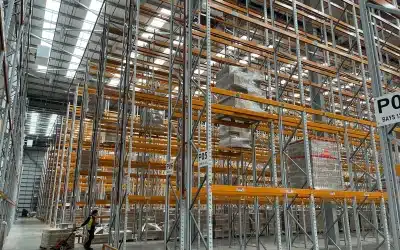
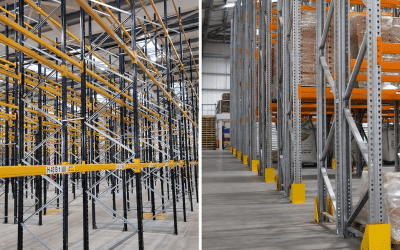
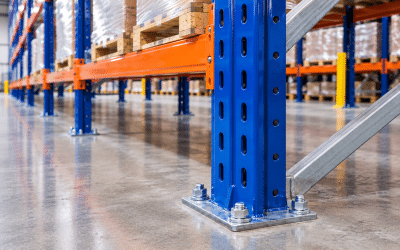
Pallet racking is essential for efficient warehouse storage, helping businesses maximise space and organise stock. However, poorly maintained, incorrectly loaded or damaged pallet racking can create serious safety risks for warehouse staff, equipment and stored goods.
Understanding the most common pallet racking safety issues is crucial for maintaining a safe working environment, reducing the risk of accidents and ensuring your warehouse storage system remains fit for purpose.
Whether you operate a small warehouse or a large distribution centre, regular inspections, correct loading procedures and proper staff training can help prevent many common racking hazards.
In this guide, we explore the top safety issues with pallet racking, how to identify potential problems and the steps you can take to improve warehouse safety.
Why Is Pallet Racking Safety Important?
Pallet racking systems are designed to support significant loads at height. When components become damaged, loads exceed their rated capacity or pallets are positioned incorrectly, the stability of the system can be compromised.
A pallet racking failure can result in falling stock, damaged equipment, serious injuries and costly operational downtime.
In the UK, employers have a legal responsibility to provide and maintain safe working equipment and safe systems of work. This includes ensuring warehouse racking is suitable for its intended use, properly maintained and inspected where necessary.
Following recognised guidance, including HSE recommendations and the Storage Equipment Manufacturers Association (SEMA) guidance, can help businesses manage the risks associated with warehouse racking.
1. Damaged or Bent Pallet Racking Components
Damage to pallet racking is one of the most significant warehouse storage safety concerns.
Forklift trucks and other material handling equipment can accidentally strike upright frames, beams and bracing during everyday warehouse operations. Even damage that appears minor can affect the structural integrity of a racking system.
Common signs of pallet racking damage include:
- Bent or twisted upright frames.
- Dented or deflected horizontal beams.
- Damaged bracing and frame connections.
- Cracked welds or loose components.
- Missing or damaged beam safety locks.
- Damaged base plates or floor fixings.
How to prevent it: Carry out regular visual checks, arrange formal racking inspections and ensure any reported damage is assessed promptly by a competent person. Damaged components should not simply be straightened or repaired without an appropriate assessment.
Where damage presents a safety risk, the affected area should be isolated and unloaded where safe to do so, following competent advice.
Installing suitable upright protectors and end-of-aisle barriers can also help reduce damage caused by forklift movements.
2. Overloaded Pallet Racking
Overloading occurs when the weight stored on a racking system exceeds its specified capacity.
Every pallet racking installation should have clearly displayed load notices detailing the permitted loading configuration and relevant load limits. These limits depend on the system design, beam configuration, bay arrangement and other installation-specific factors.
Overloading can cause beams to deflect excessively, connections to fail or the racking structure to become unstable.
Common causes of overloading include:
- Storing heavier products than the system was designed to support.
- Increasing pallet weights without reviewing load capacities.
- Changing beam levels without checking the design.
- Adding extra storage levels without approval.
- Distributing loads unevenly across beams.
How to prevent it: Make sure warehouse staff understand the load limits displayed on racking notices. Check pallet weights before storage and never assume that a racking system can accommodate additional loads simply because space is available.
If your storage requirements change, obtain a competent assessment before modifying the racking configuration.
3. Incorrect Pallet Placement and Poor Load Distribution
Correct pallet positioning is essential for safe pallet racking operation.
Pallets that are poorly positioned, damaged or unsuitable for the racking system can create unstable loads. If a pallet is not properly supported by the beams, it may slip, tilt or fall.
Unevenly distributed loads can also place additional stress on individual beams and connections.
Common pallet placement problems include:
- Pallets overhanging the beams excessively.
- Loads positioned too close to the edge of a beam.
- Damaged pallets with broken boards or unstable bases.
- Loads that are too tall or too wide for the allocated space.
- Goods stacked unevenly or with a high centre of gravity.
How to prevent it: Use pallets that are suitable for the racking system and the goods being stored. Ensure pallets are correctly positioned and fully supported according to the installation design.
Train forklift operators to place pallets carefully and report damaged pallets before they are stored at height. Where necessary, use appropriate pallet support bars or decking specified for the system.
4. Forklift Truck Collisions
Forklift collisions are a common cause of pallet racking damage in busy warehouses.
Narrow aisles, poor visibility, congested picking areas and rushed handling can increase the likelihood of impacts with racking uprights and stored loads.
Even when a collision does not immediately cause a collapse, it may weaken a component or create damage that becomes more serious over time.
How to prevent it: Review warehouse traffic routes and ensure aisles provide sufficient clearance for the equipment in use. Provide appropriate operator training, maintain good visibility and implement clear traffic management procedures.
Protective barriers, upright guards and end-of-aisle protection can help reduce the likelihood and consequences of accidental impacts.
Following any collision, the affected racking should be assessed rather than assumed safe because it remains standing.
5. Inadequate Pallet Racking Inspections
Regular inspections are essential for identifying damage and unsafe conditions before they lead to an incident.
Without a suitable inspection programme, problems such as bent uprights, loose fixings, displaced beams and overloaded bays may go unnoticed.
In the UK, HSE guidance recommends regular inspections of storage equipment, including reporting damage immediately and arranging inspections by a technically competent person at appropriate intervals.
A good pallet racking inspection programme should include:
- Routine visual checks by warehouse staff.
- Prompt reporting of damage or suspected defects.
- Inspections by a competent person at suitable intervals.
- Records of findings, risk assessments and corrective actions.
- Follow-up checks to confirm that identified issues have been addressed.
The frequency of inspections should reflect the working environment, level of activity, history of damage and manufacturer’s recommendations.
How to prevent it: Establish a documented inspection schedule and make sure employees know how to report damaged racking. Arrange a formal expert inspection at least annually as a general benchmark, or more frequently where risk and site conditions warrant it.
A daily visual check is not a substitute for a competent inspection.
6. Incorrect Racking Installation or Unauthorised Modifications
Pallet racking must be installed in accordance with its design specifications and the manufacturer’s instructions.
Poor installation, unsuitable floor fixings, inadequate bracing or incorrect component combinations can compromise the stability of the structure.
Problems can also arise when warehouse teams make unauthorised changes, such as moving beam levels, replacing components with incompatible parts or adding extra bays.
Even apparently straightforward alterations can affect load capacities and the overall structural design.
How to prevent it: Use competent installers who understand the specific racking system and its design requirements. Ensure the floor and fixings are suitable and that the completed installation is checked before use.
Never modify an existing system without confirming that the proposed changes are appropriate. Obtain an updated design assessment and revise load notices where required.
When purchasing used pallet racking, check that the components are compatible, serviceable and suitable for the intended installation.
7. Falling Goods and Unstable Loads
Falling goods present a serious risk to warehouse employees and visitors.
Products can fall from pallet racking when loads are unstable, pallets are damaged, stock protrudes into aisles or goods are stored incorrectly.
The risk may be particularly high in areas with frequent picking activity, high storage levels or pedestrian access.
How to prevent it: Store goods securely and ensure loads are stable before placing them into racking. Avoid storing loose items at height without suitable containment and keep products within the designated storage area.
Depending on the application, suitable mesh backs, pallet safety nets, rack cladding or other load-retention systems may help prevent goods from falling into working areas.
Any protection installed should be appropriate for the racking design and the loads involved.
8. Poor Warehouse Housekeeping and Blocked Aisles
Warehouse housekeeping plays an important role in pallet racking safety.
Obstructed aisles, discarded packaging, damaged pallets and stock left in traffic routes can increase the likelihood of collisions and make emergency access more difficult.
Poor housekeeping can also prevent forklift operators from manoeuvring safely and reduce visibility around racking aisles.
How to prevent it: Keep aisles, pedestrian walkways and emergency routes clear. Remove damaged pallets and packaging promptly, and establish designated areas for waste and temporary stock.
Regular housekeeping checks help maintain safe access to storage locations and reduce avoidable handling risks.
9. Inadequate Staff Training and Safety Procedures
Even a well-designed pallet racking system can become unsafe if warehouse employees do not understand how to use it correctly.
Staff should know how to identify obvious damage, report hazards, follow loading instructions and operate equipment safely around storage systems.
Without appropriate training, employees may unknowingly overload bays, store unsuitable pallets or continue using damaged racking.
How to prevent it: Provide relevant training for forklift operators, warehouse staff, supervisors and anyone responsible for inspections or maintenance.
Training should cover load limits, safe pallet placement, damage reporting, traffic management and the procedures to follow when a racking defect is identified.
Clear signage and written procedures can reinforce safe working practices.
10. Missing Load Notices and Incorrect Capacity Information
Load notices provide important information about the safe use of a pallet racking installation.
If notices are missing, illegible or out of date, warehouse staff may not know the permitted loading configuration or maximum safe loads.
This becomes especially important when racking has been altered, relocated or adapted to accommodate different stock.
How to prevent it: Ensure appropriate load notices are displayed in visible locations and reflect the actual installed configuration. Replace damaged notices and update them following authorised design changes.
Never estimate racking capacity based on appearance, beam size alone or the capacity of a similar-looking system.
If load information is unavailable, obtain confirmation from the manufacturer, supplier or a suitably qualified specialist before loading the system.
How Often Should Pallet Racking Be Inspected?
The inspection frequency should be based on risk, the working environment, the condition of the system and applicable guidance.
A practical inspection programme typically includes three levels:
| Inspection type | Purpose |
|---|---|
| Routine visual checks | Identify obvious damage, unsafe loading and other hazards during normal warehouse operations. |
| Regular documented inspections | Review the condition of the racking, record defects and ensure corrective actions are taken. |
| Expert inspection | Arrange a detailed assessment by a technically competent person, typically at least annually as a general benchmark, or more frequently if required by the risk assessment. |
SEMA guidance and HSE recommendations provide useful reference points when developing an inspection programme.
The precise frequency should be determined by a competent assessment rather than relying on a fixed interval for every warehouse.
What Should You Do If You Find Damaged Pallet Racking?
If you discover damaged pallet racking, take the following steps:
- Report the damage immediately. Notify the warehouse manager or the person responsible for storage equipment safety.
- Restrict access where necessary. Prevent people and equipment from entering an affected area if there is a risk of collapse or falling goods.
- Arrange a competent assessment. Have the damage evaluated to determine the appropriate corrective action.
- Unload or isolate the affected bay as advised. Do not attempt to remove loads or dismantle damaged components unless it is safe and appropriately planned.
- Repair or replace components correctly. Use compatible, approved components and competent personnel.
- Inspect before returning the system to service. Confirm that the necessary corrective work has been completed and the system is safe to use.
Do not ignore minor-looking damage or attempt makeshift repairs. If the severity of a defect is uncertain, seek competent advice.
Are Used Pallet Racking Systems Safe?
Used pallet racking can be a cost-effective option for businesses looking to expand storage capacity or reduce warehouse fit-out costs. However, safety should always be a priority when purchasing second-hand equipment.
The condition, compatibility and suitability of used racking components should be checked before installation.
Before purchasing used pallet racking, consider:
- Whether the components are free from unacceptable damage.
- Whether beams, frames, connectors and accessories are compatible.
- Whether the system is suitable for your intended pallet weights and storage configuration.
- Whether sufficient information is available to establish safe load capacities.
- Whether the installation can be designed, installed and inspected appropriately.
Used racking should never be assumed safe simply because it was previously in service.
A reputable supplier should help you establish the suitability of the equipment and arrange appropriate design and installation support where required.
Pallet Racking Safety Checklist
Use this checklist as a starting point for reviewing warehouse storage safety.
Formal inspections are recorded and corrective actions followed up.
This checklist does not replace a formal risk assessment or a competent pallet racking inspection.
Frequently Asked Questions About Pallet Racking Safety
What is the most common cause of pallet racking damage?
- Forklift truck impacts are a common cause of damage to pallet racking, particularly to upright frames and end-of-aisle sections. Poor loading practices, overloading and inadequate maintenance can also contribute to safety problems.
Is pallet racking legally required to be inspected in the UK?
- UK workplace health and safety legislation requires employers to maintain safe work equipment and manage workplace risks. HSE guidance recommends regular inspection of storage equipment, including inspections by a technically competent person at appropriate intervals. The exact requirements depend on the circumstances and applicable legislation.
How often should pallet racking be professionally inspected?
- An annual inspection by a technically competent person is a widely used benchmark, with more frequent inspections potentially necessary depending on risk, usage, damage history and site conditions. Routine visual checks should also be carried out between formal inspections.
Can damaged pallet racking be repaired?
- Yes, depending on the type and extent of damage. A competent person should assess the defect and determine whether the affected component needs replacing or whether an approved repair solution is appropriate. Improvised repairs and unauthorised straightening should be avoided.
What are the signs that pallet racking may be unsafe?
- Warning signs include bent uprights, damaged beams, missing safety locks, loose floor fixings, unstable pallets, missing load notices and unauthorised modifications. Any suspected defect should be reported and assessed promptly.
Is used pallet racking safe to buy?
- Used pallet racking can be safe when it is in suitable condition, compatible with the intended system and properly designed and installed. Its condition and load capacity should be verified before use.
Final Thoughts: Make Pallet Racking Safety a Priority
Pallet racking safety is essential for protecting warehouse employees, preventing stock damage and maintaining efficient operations.
The most important risks to manage include damaged components, overloading, incorrect pallet placement, forklift collisions, inadequate inspections and unauthorised modifications.
By implementing regular inspections, providing appropriate staff training and following manufacturer instructions and recognised industry guidance, businesses can significantly reduce the risks associated with warehouse storage.
Whether you are installing a new system, upgrading existing storage or purchasing used pallet racking, choosing suitable equipment and maintaining it correctly are essential steps towards a safer warehouse.
Need pallet racking for your warehouse? Contact us on 0800 612 3210 to find a solution that meets your space requirements, storage needs and safety obligations.