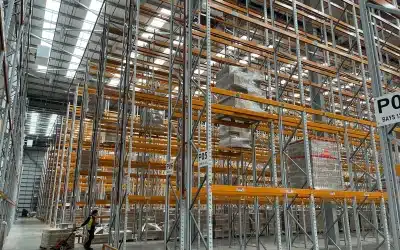
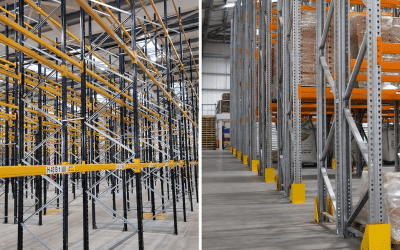
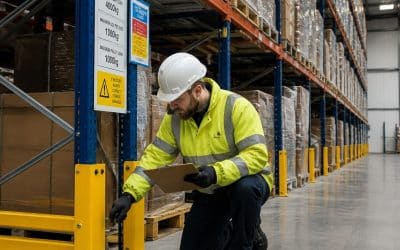
Pallet racking is an essential part of many warehouse storage systems, helping businesses maximise available space and store goods safely and efficiently. However, one common question warehouse managers ask is: should pallet racking be bolted to the floor?
In most cases, pallet racking should be securely anchored to the warehouse floor in accordance with the system design, manufacturer’s instructions and applicable safety requirements. Floor fixings help stabilise the racking structure and reduce the risk of movement, particularly when pallets are loaded, unloaded or accidentally struck by handling equipment.
Whether you are installing new pallet racking, purchasing used warehouse racking or reviewing an existing storage system, understanding the importance of floor anchoring is essential for maintaining a safe warehouse environment.
In this guide, we explain why pallet racking is usually bolted to the floor, when fixings are required, and what businesses should consider before installing a warehouse storage system.
Why Should Pallet Racking Be Bolted to the Floor?
Pallet racking is designed to support substantial loads, often weighing hundreds or thousands of kilograms across individual bays. Although the structure is engineered to carry these loads, it must also remain stable under the conditions for which it was designed.
Bolting pallet racking to the floor helps secure the upright frames in position and provides resistance against forces that could cause the structure to move.
The main benefits include:
- Improved Stability: Floor anchors help prevent unwanted movement at the base of the racking uprights. This is particularly important in busy warehouses where forklifts and other materials-handling equipment regularly operate around the storage system.
- Reduced Risk of Accidental Movement: Forklift impacts, uneven loading and other operational forces can place stress on pallet racking. Correctly specified and installed anchors help secure the structure, although they do not eliminate the risk of damage or overturning.
- Support for the Designed Racking Configuration: Pallet racking systems are designed around specific loads, dimensions, bracing arrangements and installation requirements. Floor fixings form part of the installation requirements where specified by the system design. Using the correct anchors helps ensure the installation reflects the manufacturer’s requirements and the design assumptions.
- Improved Warehouse Safety: Securely installed pallet racking helps support a safer working environment for warehouse staff, forklift operators and anyone working near the storage system. However, floor anchoring is only one part of racking safety. Correct loading, regular inspections, suitable load notices and prompt repairs are equally important.
Is It a Legal Requirement to Bolt Pallet Racking to the Floor?
For UK warehouses, it is important to distinguish between a general legal duty to maintain safe equipment and the specific technical requirements for an individual racking installation.
UK health and safety legislation requires employers to manage workplace risks and ensure that work equipment is suitable and maintained. The Provision and Use of Work Equipment Regulations 1998 (PUWER) may be relevant to the safe provision and use of warehouse equipment.
There is not a single rule that specifies an identical floor-fixing arrangement for every pallet racking system. The appropriate anchoring requirements depend on the rack design, manufacturer’s instructions, installation specification, floor conditions and applicable standards.
In practice, pallet racking should be anchored wherever required by the manufacturer’s instructions or the installation’s engineered design. A competent racking specialist should assess any uncertainty rather than assuming that an unbolted system is safe.
Businesses should seek competent advice if they are unsure whether their existing racking has been installed correctly.
What Happens If Pallet Racking Is Not Bolted Down?
Leaving pallet racking unanchored when its design requires floor fixings can compromise the stability of the installation and increase the risk of serious incidents.
Potential problems include:
- Movement at the base: Uprights may shift from their intended positions.
- Reduced structural stability: The system may not perform as intended under its designed loading conditions.
- Increased vulnerability to impacts: Accidental contact from forklifts may contribute to movement or damage.
- Potential collapse: In severe circumstances, an inadequately installed or damaged racking system may fail, putting workers and stored goods at risk.
- Compliance concerns: An installation that does not follow its design specification may require corrective work.
It is important to remember that simply adding bolts does not automatically make a racking system safe. The anchors must be suitable for the rack, correctly installed and compatible with the concrete floor.
What Type of Floor Fixings Are Used for Pallet Racking?
The type of floor anchor required depends on the racking system, the forces involved and the properties of the warehouse floor.
Common options include:
- Mechanical Anchors: Mechanical anchors are commonly used to secure racking baseplates to suitable concrete floors. They grip the surrounding concrete through a mechanical fixing mechanism.
- Other Approved Anchoring Systems: Depending on the design and floor conditions, other engineered anchoring solutions may be appropriate. The selected fixing must meet the requirements of the racking design and the concrete substrate. When selecting floor fixings, installers should consider:
-
-
- The anchor type and dimensions specified for the installation.
- Concrete thickness and strength.
- The condition of the concrete and any cracking.
- The position of reinforcement, joints and other embedded services.
- Required embedment depth and installation torque, where applicable.
- The manufacturer’s installation instructions.
-
Never choose floor anchors based on appearance or convenience alone. The correct fixing should be specified for the particular racking system and floor conditions.
Can Pallet Racking Be Installed Without Bolting It to the Floor?
Some storage systems may have different anchoring requirements depending on their design and intended use. However, you should never assume that pallet racking can safely remain unbolted simply because it appears stable when empty.
Before deciding not to install floor fixings, obtain confirmation from the racking manufacturer, designer or a suitably competent specialist that the proposed arrangement is appropriate for the specific system. This is particularly important when dealing with:
- Used pallet racking being installed at a new premises.
- Changes to the original racking layout.
- Different beam levels or loading requirements.
- Alterations to bracing or frame configurations.
- Uneven, damaged or unsuitable concrete floors.
- Existing installations with missing or damaged anchors.
Used pallet racking can offer a cost-effective warehouse storage solution, but its original installation requirements must still be considered. Components, fixings and configurations should be checked for suitability before the system is put into service.
How to Check Whether Your Existing Pallet Racking Is Properly Anchored
Regular checks can help identify missing or damaged fixings before they contribute to a more serious problem. When reviewing an existing installation, look for:
- Missing bolts: Check that the specified floor anchors are present at the required locations.
- Loose or damaged fixings: Look for signs of movement, damage or deterioration.
- Damaged baseplates: Check for visible bending, cracking or other damage.
- Cracked or deteriorating concrete: Look for defects around the anchor positions that could affect their performance.
- Signs of impact: Inspect uprights and baseplates for forklift damage or movement.
- Installation documentation: Compare the actual installation with available drawings and the manufacturer’s requirements.
These visual checks are not a substitute for a competent racking inspection. If you find missing anchors, damaged baseplates, displaced uprights or signs of structural instability, restrict access to the affected area as appropriate and obtain competent advice promptly. Do not continue loading a potentially unsafe section.
Does Floor Anchoring Matter When Buying Used Pallet Racking?
Yes. If you are purchasing used pallet racking, it is important to assess more than the condition of the beams and uprights. Before installation, check that the system is suitable for the intended warehouse, including its layout, load requirements, floor conditions and anchoring specification. A suitable installation should take account of:
- The compatibility and condition of the racking components.
- The required load capacities and configuration.
- The suitability of the warehouse floor.
- The correct anchors and installation method.
- The available installation drawings and technical information.
- The need for professional installation and inspection.
A well-planned used pallet racking installation can provide a practical and economical storage solution, but cutting corners on floor fixings or installation requirements can create avoidable safety risks.
Final Thoughts: Should Pallet Racking Be Bolted to the Floor?
In most conventional pallet racking installations, floor anchoring is an important part of a safe and correctly installed storage system. Where the manufacturer or engineered design specifies anchors, they must be installed correctly using suitable fixings and an appropriate floor substrate.
The exact requirements will depend on the racking design, loading conditions and installation specification. Businesses should not assume that all systems use the same fixings or that an apparently stable, unbolted rack is safe.
Whether you are fitting new pallet racking or planning a warehouse using used pallet racking, professional advice can help ensure the system is suitable for your space and intended use.
If you need help planning a warehouse storage system, choosing suitable pallet racking or arranging a used racking installation, contact our sales team on 0800 612 3210 and we can help you make the most of your available space while prioritising safety.