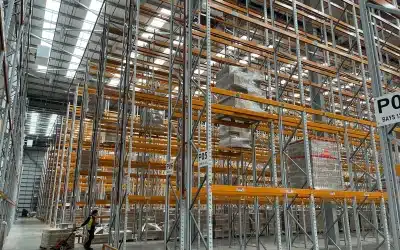
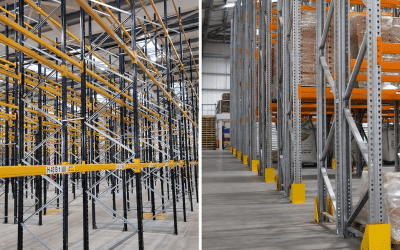
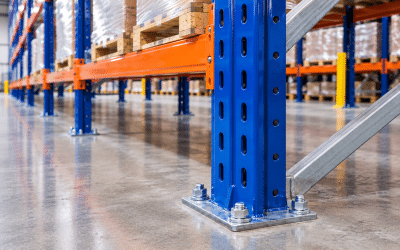
Organising and storing inventory in a warehouse requires the right pallet racking system to optimise storage space, boost efficiency, and keep operations safe. With so many pallet racking options available, choosing the best fit for your business can be challenging. In this blog, we’ll explore the most common pallet racking systems, from a whole range of storage density. We will highlight their key features, so you can make the right choice for your warehouse setup.
Adjustable Pallet Racking
Overview: Adjustable pallet racking (APR) is the most commonly used type of racking system. This allows direct access to every pallet, making it ideal for warehouses with a wide variety of products that are frequently picked and replenished. Adjustable pallet racking consists of upright frames and horizontal beams that create multiple levels for pallet storage.
Advantages:
- Easy Access: Each pallet is accessible without having to move others.
- Versatile: Suitable for almost any type of product.
- Cost-Effective: One of the most affordable options for warehouse racking.
- Flexible: Can be easily reconfigured as inventory needs change.
Disadvantages:
- Space Utilisation: Less dense than other systems, which can lead to wasted space, especially in warehouses with high ceilings.
Best for: Warehouses with a large number of SKUs and frequent access to pallets.

Adjustable Pallet Racking (APR)
Double Deep Pallet Racking
Overview: Double Deep pallet racking is a variation of adjustable pallet racking that stores two pallets deep per bay, effectively doubling storage density compared to traditional pallet racking. This system requires a specialised forklift with extended reach to access the second pallet in each bay.
Advantages:
- Increased Storage Density: Utilises more of the available warehouse space by reducing the number of aisles.
- Cost-Effective: Offers higher density than adjustable pallet racking without the higher costs associated with Drive-In or Push Back systems.
- Versatility: Suitable for a wide range of palletised products.
Disadvantages:
- Reduced Accessibility: Operates on a First-In, Last-Out (FILO) basis, which can limit product rotation.
- Specialised Equipment Needed: Requires a forklift with extended reach capability, increasing operational costs.
- Moderate SKU Variety: Not ideal for warehouses with a high number of SKUs that need immediate accessibility.
Best for: Warehouses seeking to balance storage density and operational efficiency, particularly for products with longer shelf lives or high volumes of the same SKU.

Double Deep Pallet Racking
Very Narrow Aisle (VNA) Pallet Racking
Overview: Very Narrow Aisle (VNA) pallet racking is a high-density storage solution that maximises the use of vertical space while minimising aisle widths. This system is designed for warehouses where maximizing floor space and storage capacity is critical. VNA systems require specialised narrow-aisle forklifts or turret trucks for operation.
Advantages:
- Maximised Space Utilisation: Reduces aisle width significantly, freeing up more space for storage.
- High Storage Density: Utilises vertical space efficiently, making it ideal for tall warehouses.
- Improved Inventory Management: Allows direct access to every pallet, similar to adjustable pallet racking.
Disadvantages:
- Specialised Equipment Required: Needs specific narrow-aisle forklifts or turret trucks, which can increase costs.
- Higher Installation Costs: Requires precise setup and may involve additional floor leveling to ensure safety and functionality.
- Slower Picking Speeds: Narrow aisles may limit the speed of material handling operations compared to standard systems.
Best for: Warehouses with high ceilings, limited floor space, and a need for direct access to a wide variety of SKUs.

Very Narrow Aisle (VNA) Racking
Drive-In/Drive-Through Racking
Overview: Drive-In and Drive-Through pallet racking systems allow forklifts to drive into the racking structure to load and unload pallets. The main difference between the two is that Drive-In systems have one entry/exit point, while Drive-Through systems allow forklifts to enter from both sides of the racking.
Advantages:
- High Density: Provides dense storage, maximising the use of available space by reducing aisle widths.
- Fewer Aisles Needed: Reduces the number of aisles required, freeing up more storage space for inventory.
- Cost-Effective for High-Volume Storage: Great for products with a limited variety but high volume of inventory.
Disadvantages:
- Limited Access: Forklifts may need to remove multiple pallets to access a single pallet in a Drive-In system.
- Product Rotation: Not ideal for products with varying shelf life, as it may be difficult to ensure the first-in, first-out (FIFO) method of inventory rotation.
Best for: Warehouses with a limited number of SKUs and a focus on bulk storage or long-term inventory.

Drive-in Racking
Push Back Racking
Overview: Push Back racking is a high-density racking system where pallets are stored on carts that can slide back along inclined rails. When a new pallet is loaded, it pushes the previous pallets backward, and forklifts unload from the front.
Advantages:
- High Density: More compact than adjustable pallet racking, offering higher storage capacity.
- First-In, Last-Out (FILO): Pallets are loaded from the front and retrieved from the front, making it ideal for products with a similar turnover rate.
- Efficient: Requires fewer aisles and increases storage space.
Disadvantages:
- Limited SKU Variety: Best for storing similar or related products due to the FILO nature.
- Complexity: Slightly more complex setup compared to simpler systems like adjustable pallet racking.
Best for: Warehouses with moderate to high-volume, similar products, where space optimisation is crucial.
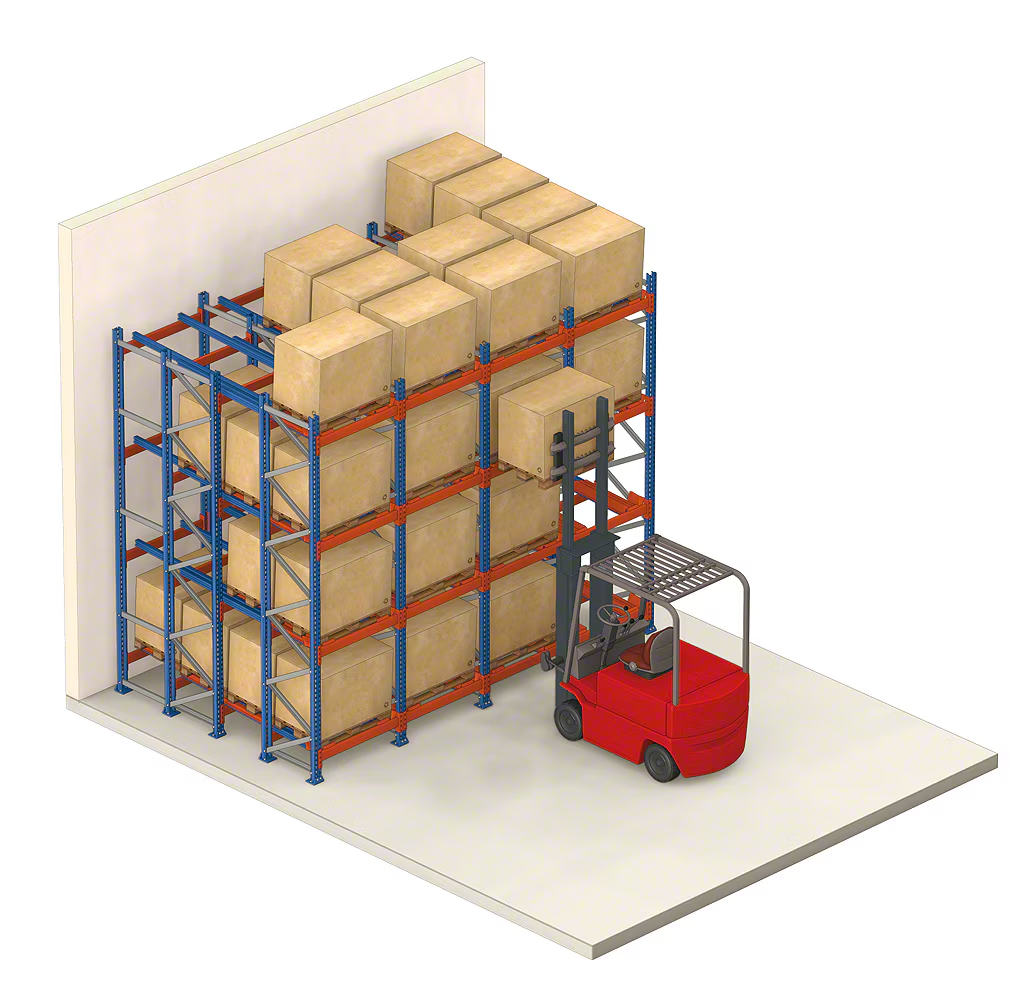
Push Back Pallet Racking
Pallet Live Racking (Gravity-fed)
Overview: Pallet live or gravity-fed racking, is a dynamic racking system where pallets are placed at the back of an inclined lane. As new pallets are loaded, they roll toward the front, making them ready for picking.
Advantages:
- FIFO Inventory Management: Perfect for perishable goods or products that need to be rotated regularly.
- Maximised Space Utilisation: Offers high-density storage with smaller aisles and optimal flow.
- Increased Picking Efficiency: As pallets automatically move forward, it reduces the need for manual handling and picking time.
Disadvantages:
- Higher Initial Cost: The infrastructure and equipment required can be expensive.
- Limited Versatility: Ideal for products that have a short shelf life or need strict FIFO adherence. Not suitable for diverse product lines.
Best for: Businesses that deal with time-sensitive inventory, such as food or pharmaceuticals.

Pallet Live (Gravity-fed) Racking
Cantilever Racking
Overview: Cantilever racking is ideal for storing long, bulky items like pipes, lumber, or steel. This system uses horizontal arms that extend out from a vertical column, allowing items to be stored without the need for front uprights.
Advantages:
- Ideal for Long Items: Perfect for storing oversized or irregularly shaped items.
- Easy to Load/Unload: Provides open access for forklifts and cranes to load and unload heavy items.
- Space-Saving: Can be used to store long materials in a compact space.
Disadvantages:
- Limited to Specific Items: Not suitable for standard pallets or smaller items.
- Lower Storage Density: Doesn’t offer the same dense storage as other systems.
Best for: Warehouses dealing with long, heavy, or bulky items like construction materials, furniture, or steel beams.
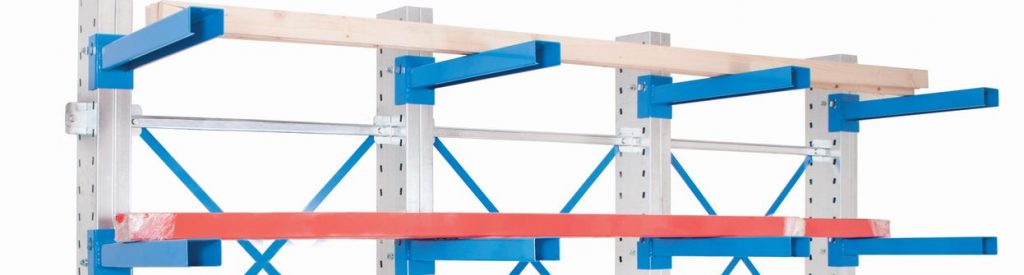
Cantilever Racking
Mobile Pallet Racking
Overview: Mobile racking systems feature racking units mounted on wheels, which can be moved to create larger aisles for access. This system allows you to eliminate some fixed aisles, providing greater storage density.
Advantages:
- Space Maximisation: Helps utilise up to 90% of available space by creating adjustable aisles on demand.
- Flexible Access: Aisles are only created when needed, improving overall warehouse space efficiency.
Disadvantages:
- High Cost: The equipment and installation are more expensive than traditional racking.
- Slower Picking: Access to pallets may be slower as the racks need to be moved to create aisles.
Best for: Businesses that need maximum storage capacity and are willing to invest in high-density solutions.

Mobile Pallet Racking
Choosing the Right Pallet Racking System for Your Warehouse
When selecting a pallet racking system, it’s essential to consider the following factors:
- Warehouse Layout: How much space do you have? What is the ceiling height? How will aisles be configured?
- Inventory Types: Are your products perishable or time-sensitive? Do you need easy access to each pallet or bulk storage?
- Budget: What’s your budget for initial setup and ongoing maintenance?
- Order Picking Method: Are you focused on picking speed, or is storage density your primary concern?
Each pallet racking system offers unique advantages and drawbacks, so the right choice depends on your specific needs. Consider factors like your inventory type, available space, and operational goals to find the system that best aligns with your warehouse requirements.
Remember, sometimes a hybrid system, combining elements of different types, might provide the best solution for your business. Whether you need to maximise storage, streamline order picking, or optimise space utilisation, there’s a pallet racking solution that fits your needs.
Contact us today on 0800 612 3210 to discuss your requirements, and we’ll help find the ideal solution for your business.