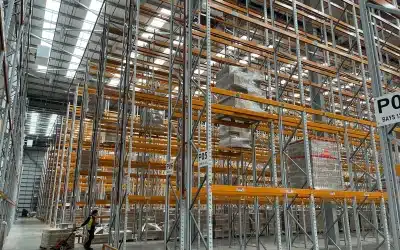
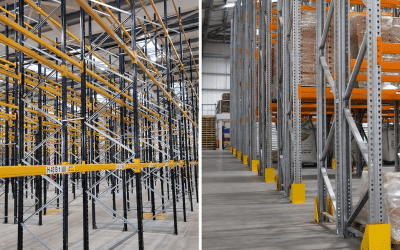
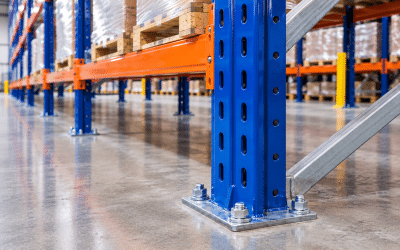
Warehouse racking systems are the foundation of efficient storage operations. Like any piece of equipment, however, they need consistent care and upkeep to remain safe, stable, and long-lasting. By following proactive maintenance practices and safety measures, you can extend the life of your pallet racking systems, cut down on repair costs, and avoid premature replacements. This guide covers essential strategies to help preserve the integrity of your pallet racking.
1. Carry Out Regular Inspections
Routine inspections are your first defence against wear and damage. Checking pallet racking systems regularly allows you to identify small issues before they develop into major safety risks.
What to check for:
- Bent or damaged components – even slight bending can weaken the structure. Note that bending is not the same as beam deflection.
- Beam safety locks – confirm all locks are fitted and secure.
- Pallet condition and placement – only use the correct size and type, and make sure pallets are undamaged and properly positioned.
- Load safety signage – ensure load notices are visible at aisle ends.
- Floor fixings – check anchors are intact and undamaged.
- Corrosion or rust – as rust reduces strength.
💡 Tip: Use a formal inspection checklist and assign a trained employee or safety officer to complete inspections regularly. Keep records to track recurring issues.
2. Train Staff on Correct Handling
Employee misuse is one of the leading causes of pallet racking damage. Proper training significantly reduces unnecessary wear and safety risks.
Focus training on:
- Safe loading practices – respect weight limits and distribute loads evenly.
- Forklift operation – stress caution when manoeuvring near pallet racking to avoid collisions.
- Damage reporting – encourage staff to report issues immediately so repairs can be carried out quickly.
⚠️ Remember: Ongoing refresher training reinforces safe habits and helps employees understand how their actions affect pallet racking longevity.
3. Schedule Routine Maintenance
While inspections identify issues, maintenance ensures problems are addressed before they escalate.
Maintenance essentials:
- Tighten bolts and fasteners regularly.
- Replace bent beams, cracked supports, or other damaged parts immediately.
🔧 Pro Tip: Perform maintenance during quieter operational periods to avoid disruption.
4. Install Protective Barriers and Guards
Physical barriers protect pallet racking from accidental impact by forklifts or other equipment.
Options include:
- Rack guards – protect the base of racks.
- End-of-aisle barriers – prevent collisions at aisle ends.
- Column protectors – shield uprights from direct impact.
➡️ Recommendation: Prioritise protective equipment in high-traffic areas where impacts are most likely.
5. Maintain Proper Load Distribution
Balanced loads are critical for safety and stability. Poor distribution increases the risk of tipping or collapse.
Best practices:
- Always follow manufacturer weight limits.
- Place heavier items on lower levels and lighter items higher up.
- Use the correct pallets and ensure loads are evenly spread (UDL – uniformly distributed load).
📌 Note: Include load distribution checks in your regular inspection routine, especially after stock movements.
6. Establish a Rack Safety Program
A structured safety program reinforces best practices across your workforce.
Core elements:
- Regular training – refresh staff knowledge on racking safety.
- Scheduled inspections – performed by qualified personnel.
- Clear reporting channels – make it easy for employees to report concerns.
✅ Benefit: A strong safety culture extends racking lifespan while creating a safer workplace overall.
Conclusion
Maximising the lifespan of warehouse pallet racking comes down to consistent inspections, routine maintenance, employee training, protective measures, and a solid safety program. These proactive steps not only save money on repairs and replacements but also ensure a safer, more efficient warehouse environment.
Worried about your pallet racking? Get in touch with us today on 0800 612 3210 for friendly, expert advice. We’ll help you find the right solution and get your warehouse running smoothly again!