If you’ve ever looked at a pallet racking quote or spoken to a supplier and wondered what terms like beam level, UDL or uprights actually mean, you’re not alone.
Pallet racking has its own terminology, and if you’re new to warehouse storage, it can feel a little overwhelming. The good news is that you don’t need to become an expert overnight.
At Shelving & Racking Ltd, we spend a lot of time helping customers understand the different parts of a pallet racking system. Knowing the basics makes it much easier to plan your warehouse, ask the right questions, and choose the best storage solution for your business.
This guide explains the most common pallet racking terms you’ll come across, so the next time you speak to us, you’ll know exactly what we’re talking about.
Pallet Racking Components
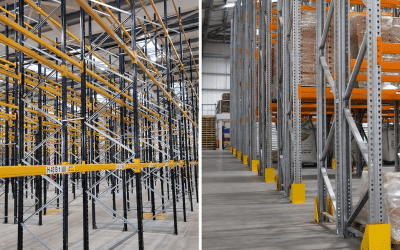
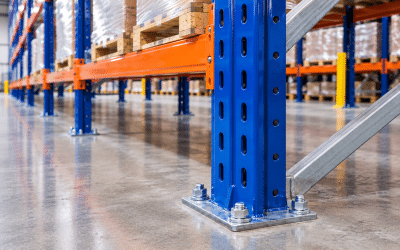
- Uprights: Uprights are the vertical supports that form the sides of your pallet racking. They’re one of the main structural components and are designed to carry the weight of the entire system.
- Frame:A frame is created by joining two uprights together with horizontal and diagonal bracing. Frames provide the strength and stability needed to support the beams and stored pallets.
- Bracing: Bracing refers to the horizontal and diagonal steel sections that connect the uprights. These keep the frame rigid and help distribute weight safely throughout the racking.
- Beams: Beams are the horizontal sections that connect between the frames. They create the storage levels where pallets are placed. Two beams make up one beam level.
- Beam Lock: The beam locks sometimes called locking pins, secure the beams in place and help prevent them from being accidentally dislodged by forklift trucks during normal warehouse operations.
- Shim: Warehouse floors aren’t always perfectly level. Shims, also known as levelling plate, are fitted underneath the footplates during installation to ensure the racking sits evenly and safely.
Understanding Pallet Racking Layouts
- Beam Level: A beam level is simply one storage shelf created by a pair of beams. The number of beam levels determines how much stock can be stored within a bay.
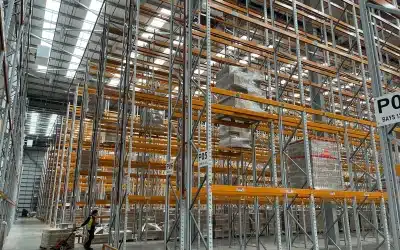
- Bays: A bay is a single section of pallet racking made up of two frames with one or more beam levels between them.
- Run: A run is a continuous line of connected pallet racking bays.
- Clear Entry: Clear entry is the usable distance between the two uprights rather than the overall beam length. This measurement is often needed when ordering replacement beams or planning new pallet racking.
Understanding Pallet Racking Load Limits
One of the most important parts of any warehouse racking system is making sure it can safely support the weight of your products.
- UDL: Stands of Uniformly Distributed Load. For example, a beam rated at 2700mm x 2 tonne UDL means a pair of beams can safely support 2,000kg, provided the weight is spread evenly across both beams.
- SWL: Stands for Safe Working Load. This is the maximum weight a pallet racking component can safely carry without compromising safety.
- First Beam Level:The first beam level measures the height from the warehouse floor to the top of the lowest pair of beams.
- Beam Pitch: Beam pitch is the vertical distance between one beam level and the next, measured from the top of one beam to the top of the beam above.
- Bay Load: Bay load is the total amount of weight that a complete pallet racking bay can safely support. For example, if each beam level has a UDL of 2,000kg and there are four beam levels, the total bay load would be 8,000kg.
- Load Notice: Load notices are safety signs fixed to pallet racking systems that clearly show:
- Maximum bay load
- Beam capacities
- Beam heights
- Beam pitch
- Safe loading information
These notices help warehouse staff load racking correctly and safely.
Warehouse Aisles and Forklift Access
Choosing the correct aisle width is just as important as selecting the right pallet racking.
- Aisle Width: Aisle width is the distance between two rows of pallet racking. It needs to be wide enough for your forklift trucks to operate safely and efficiently. The ideal width depends on the type of forklift used and the storage density you’re aiming to achieve.
- Turning Circle: Also known as the turning radius, this is the amount of space a forklift needs to turn safely. Counterbalance forklifts generally require wider aisles than reach trucks, so it’s worth considering this when planning your warehouse layout.
Useful Pallet Racking Accessories
The right accessories can improve safety, increase storage options, and help protect your investment.
- Decking: Decking sits on top of the beams to provide additional support for stored items.
Popular options include:
- Wire mesh decking
- Timber decking
- Steel decking
- Splice: A splice kit allows the height of an existing frame to be increased by joining another frame section above it using a steel connector and bolts.
- Row Spacer: Row spacers are fitted between back-to-back pallet racking runs to maintain consistent spacing and improve stability. Typically, two or three row spacers are installed per frame.
- Anti-collapse Mesh: Anti-collapse mesh is fixed to the back of pallet racking to stop products from falling into neighbouring aisles or pedestrian walkways. It’s particularly useful in busy warehouses where staff regularly work close to stored pallets.
- Column Guards and Barrier Rails: Forklift impacts are one of the biggest causes of pallet racking damage. Column guards and barrier rails help protect uprights from accidental knocks, reducing repair costs and improving warehouse safety.
- Pallet Support Bars: Pallet support bars fit between beams to provide additional support underneath pallets. While they improve stability, they should never be relied upon to carry the full weight of the load.
Why Understanding Pallet Racking Terminology Matters
Whether you’re buying your first pallet racking system or expanding an existing warehouse, understanding the terminology makes the whole process much easier.
Knowing the difference between a bay and a run, understanding load capacities, and recognising the main racking components will help you:
- Choose the right pallet racking system for your warehouse
- Communicate more confidently with suppliers and installers
- Improve warehouse safety
- Avoid costly mistakes
- Make better long-term storage decisions
At Shelving & Racking Ltd, we’re always happy to explain the technical side of warehouse storage in plain English. If you’re unsure about any pallet racking terminology or need advice on choosing the right storage solution, get in touch with our friendly team on 0800 612 3120. We’re here to help.